_curve.png)
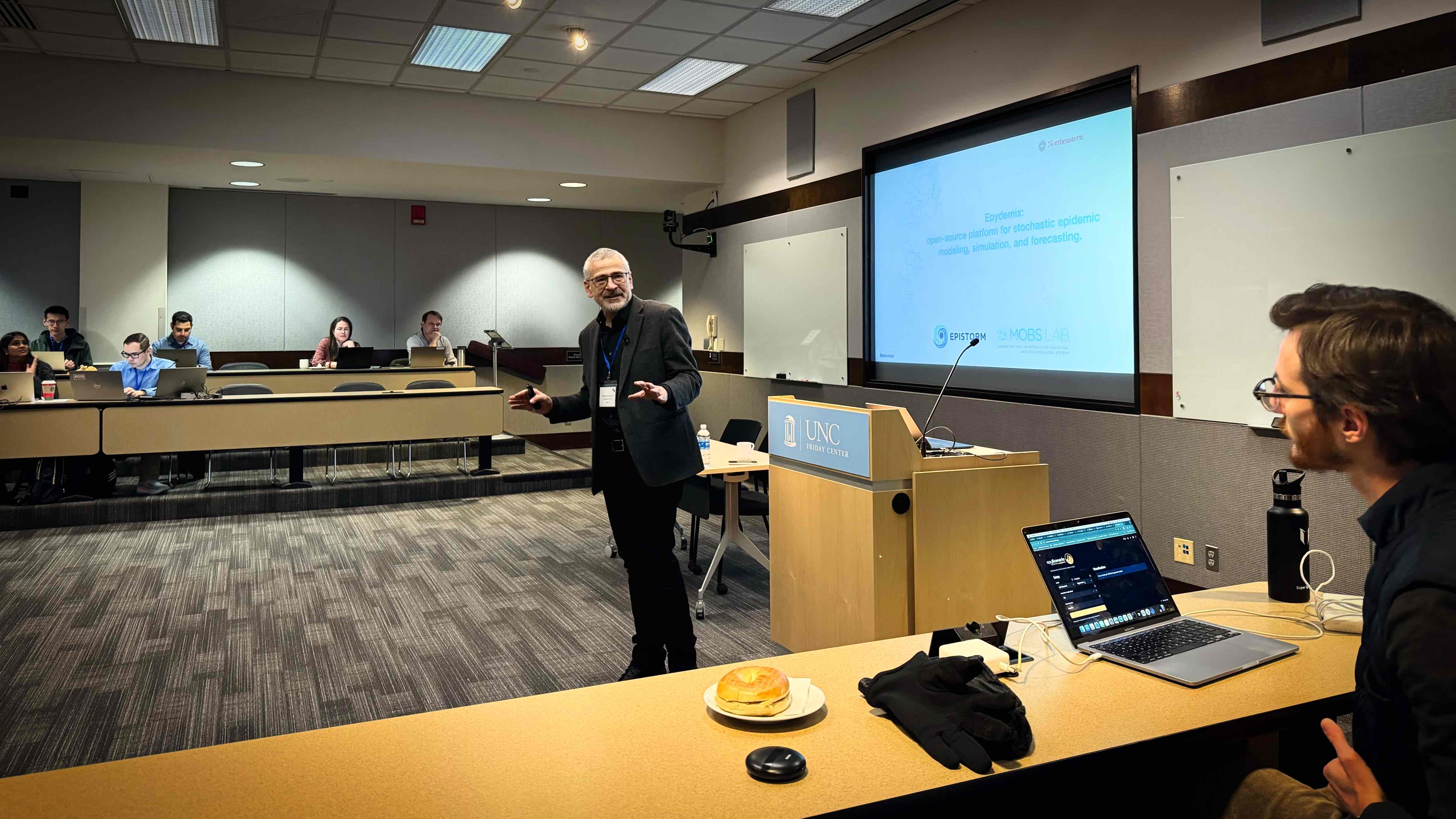
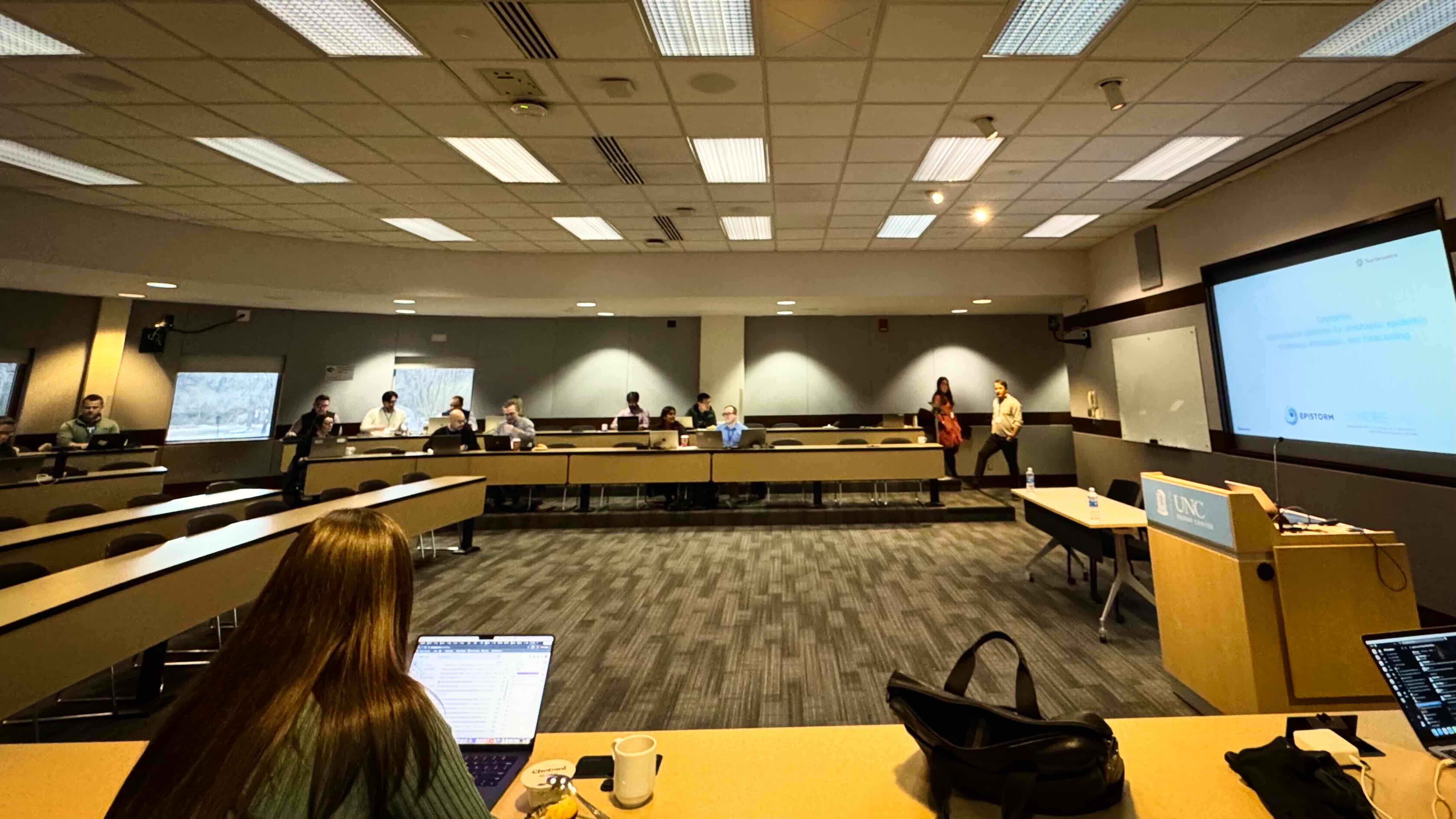
In January 2026, the Epistorm team delivered a successful Technology Transfer Workshop at the University of North Carolina at Chapel Hill, engaging more than 40 participants from the InsightNet network, including over 20 representatives from STLTs. This two-day, hands-on workshop introduced participants to Epydemix, an open-source platform for stochastic epidemic modeling, simulation, and forecasting. Participants gained both theoretical understanding and practical experience using Epydemix across its various interfaces, including simulation dashboards, the Python package, R integration, and forecasting tools.
.png)
Participants expressed strong interest in continued learning opportunities, including use-case-specific tutorials and technical support for operational implementation. The workshop also generated valuable feedback on tool improvements for real-world applications, informing future development priorities. The Epistorm team will maintain engagement through documentation updates, online tutorials, and periodic check-ins to support tool adoption and address emerging needs in the InsightNet community.
The workshop emphasized applied learning through guided tutorials and independent exercises. Participants learned to design age-structured epidemic models, implement calibration methods for parameter estimation, and generate forecasts with uncertainty quantification. By the end, attendees were equipped to incorporate Epydemix into research and operational settings with reproducible, cross-platform workflows.
Participants gained experience across multiple Epydemix interfaces, from no-code simulation dashboards (EpyScenario) to programmatic workflows in Python and R. This multi-platform approach ensures accessibility for users with varying technical backgrounds, from epidemiologists
Day 2 focused on end-to-end forecasting pipelines using real-world influenza hospitalization data from the United States. Participants used the EpyForecast app to calibrate models at different epidemic phases, explore calibration settings, and evaluate forecast performance—skills directly applicable to operational public health surveillance.
The workshop fostered connections among STLT practitioners, academic researchers, and CDC CFA teams. Participants identified opportunities for ongoing collaboration, tool adoption in their jurisdictions, and contributions to the open-source Epydemix ecosystem. Next steps include supporting continued skill development through online resources and expanding the user community.
Strengthens epidemic modeling capacity at state, tribal, local, and territorial health departments by providing accessible, production-ready tools for simulation, calibration, and forecasting. Equips public health practitioners with tools to generate actionable insights during outbreaks, evaluate intervention scenarios, and communicate uncertainty to decision-makers.


.png)